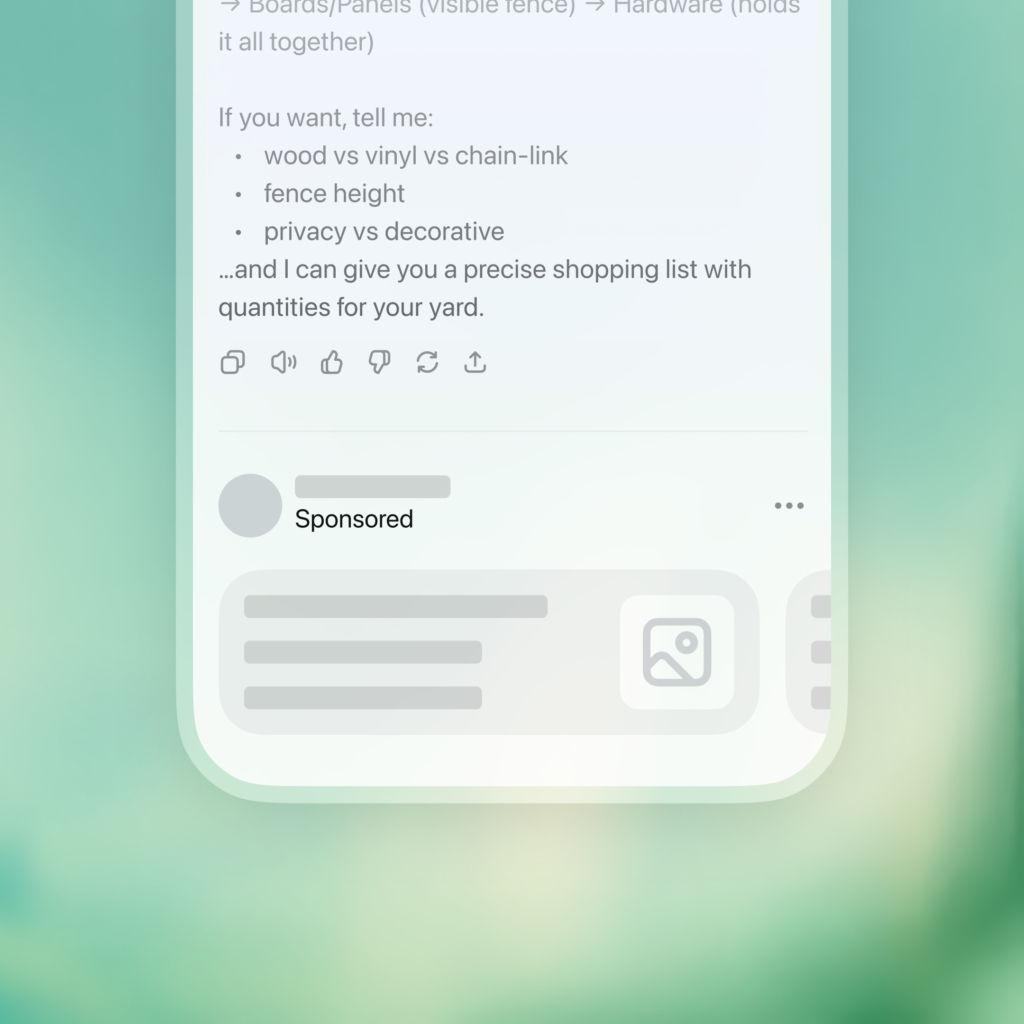
There’s a lot of noise out there about ChatGPT Ads right now. Some of it’s exciting, some of it’s overblown, and quite a lot of it doesn’t really help you decide whether this is something worth spending your marketing budget on.
We’ve been following this since the US launch in February 2026, so we’ve had a few months to watch what’s actually happened before the UK went live on 6 June. Here’s our honest take.
First – What Do We Actually Know?.
It’s worth starting with what the evidence says rather than what people are predicting.
The US advertising pilot launched in February 2026. OpenAI reported three things from the early data: trust in ChatGPT wasn’t affected by ads being shown, users weren’t dismissing the ads at high rates, and relevance was improving as the system learned. Those are OpenAI’s own numbers, so take them with that in mind – but the direction of travel is positive.
Within six weeks, the US ad business had crossed $100 million in annualised revenue. By May, it was open to any business regardless of size or budget. Agencies that tested it early in the US have reported genuine conversions and strong results, though most have been honest that early campaigns work better as awareness activity than as straight direct-response advertising.
The UK launched with the more mature version of the product – conversion tracking, cost-per-click bidding, daily budget controls and geographic targeting all available from the start. It’s a more measurable channel than the US had at launch.
That’s the evidence base. Now, the honest pros and cons.
The Pros.
You’re meeting customers mid-decision
The best thing about ChatGPT Ads is where they appear. When someone’s asking ChatGPT, “Which accountant should I use?” or “What should I look for in a local builder?” they’re already thinking about spending money. They’re not passively scrolling – they’re actively working out what to do.
Being visible at that moment, in that conversation, is genuinely valuable. It’s different to catching someone mid-scroll on Facebook, and it’s different to catching someone mid-search on Google. The intent is clear because the user has literally said what they’re looking for.
The competition is low right now
The UK has just launched. Most local and small businesses don’t know this channel exists yet, let alone have campaigns running. That means the cost of showing up is lower and the chance of being visible is higher than it will be once everyone’s on it.
This won’t last. Based on the US pattern, full open access for all UK advertisers is expected by the end of 2026. Once that happens, more businesses pile in, costs go up, and the early-mover advantage disappears.
You can measure it properly
Early concerns about ChatGPT Ads being unmeasurable have been addressed. Conversion tracking is available, cost-per-click and cost-per-action bidding are both in place, and you can set daily budgets so there are no nasty surprises. It’s a proper measurable channel, not a leap of faith.
It works alongside what you’re already doing
ChatGPT Ads don’t replace Google Ads Pay-Per-Click – they work alongside them. Google catches people when they type a search. ChatGPT catches people when they’re having a conversation about a decision. The two complement each other rather than competing for the same budget.
The Cons.
You can’t set it up yourself yet
The self-serve Ads Manager is available to UK businesses now at openai.com/advertisers. You can set up an account and get a campaign running directly – no need to go through OpenAI’s sales team. In that sense, it’s similar to Google Ads – you log in, set your budget, and go.
It’s still changing quickly
The platform is developing fast, which is exciting – but it also means what works today might not be the optimal approach in three months. You need to stay on top of it, or work with someone who does. Set-and-forget doesn’t work here.
Targeting works differently to what you’re used to
There are no keywords. Instead, you describe the types of conversations where you want your ad to appear – OpenAI calls these “context hints.” If you’ve spent years thinking about Google Ads in terms of keywords and match types, this is a genuinely different way of thinking. It’s not harder, just different – and getting it wrong means your ads show up in irrelevant conversations.
It’s better for awareness than direct response right now
The honest read from early US data is that ChatGPT Ads currently sit closer to mid-funnel awareness activity than bottom-funnel “click here and buy” advertising. Results are improving as the platform matures, but if you’re expecting it to immediately perform like a well-optimised Google Ads campaign that’s been running for years, you’ll be disappointed. Think of an early test as buying learning as much as buying leads.
Not every business type is a good fit
If your customers don’t really research before buying from you, the channel is less relevant. Some categories are also excluded by OpenAI’s own policy – including private healthcare and mental health services.
So Should You Test It?.
Here’s the honest answer: probably yes, if you’re a service business where customers research before they buy – but with sensible expectations and a realistic budget.
The businesses we’d suggest move now:
- Local service businesses where trust and research matter (estate agents, tradespeople, financial services, legal, care)
- Professional services where customers actively seek recommendations
- Businesses already running Google Ads who want to test the next channel before the crowd arrives
The businesses we’d suggest hold off a bit longer:
- Pure impulse-purchase products with no research phase
- Regulated categories currently excluded from the platform
- Businesses with no existing paid media foundation to build from
If you’re in the first group, the time to test is now – before costs rise and before your competitors get there first.
Want to Know More Before Deciding?.
Get in touch, and we’ll tell you whether we think ChatGPT Ads are right for your specific business – and what it would realistically cost to find out.